


Intensifies in new Moon race
 Rabbia Zafar
|
2 weeks ago
Rabbia Zafar
|
2 weeks ago
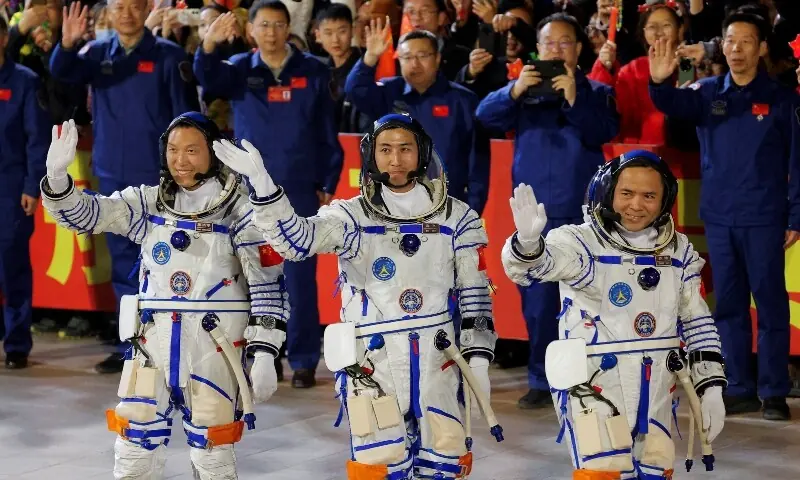
The global race to the Moon is accelerating as NASA advances its Artemis programme while China pushes to land astronauts on the lunar surface by 2030, adding fresh geopolitical urgency to space exploration.
The recent Artemis II mission marked a significant milestone, with four astronauts travelling farther into space than any humans before, flying past the Moon’s far side. The mission sets the stage for a planned crewed landing under Artemis IV later this decade.
China, meanwhile, is rapidly developing its own lunar programme, including the Long March-10 rocket, Mengzhou spacecraft and Lanyue lunar lander. The country has already achieved notable success through robotic missions, becoming the first to return samples from both the near and far sides of the Moon.
Experts say the competition is no longer just about reaching the Moon first, but about establishing a sustained presence. Both nations are also building alliances, with the US promoting the Artemis Accords while China collaborates with partners on the International Lunar Research Station.
According to analysts, the stakes extend beyond science into global influence. Lunar exploration is increasingly seen as a symbol of technological leadership and strategic power in an era of growing rivalry between Washington and Beijing.
China faces challenges in proving the reliability of its new mission systems, including rockets and crewed spacecraft, within a tight timeline. However, recent successful tests suggest steady progress, making its 2030 target achievable.
The renewed focus on lunar missions signals a shift from short-term exploration to long-term habitation. As both countries ramp up efforts, the Moon is emerging as the next frontier of geopolitical competition, with implications for future resource use, technological advancement and global leadership in space.





Pakistan National Security Committee takes firm stance after India escalation over Pahalgam incident

Ghotki youth killed after accidental gunfire during dog shooting incident
Instagram tests “Instants” app for disappearing photos

13 minutes ago

40 minutes ago

1 hour ago

2 hours ago

2 hours ago

2 hours ago
- India’s position on the Indus Waters Treaty has sparked renewed legal and political debate across South Asia. Pakistani officials and…
- FIFA has clarified that Iran will participate in the FIFA World Cup 2026, dismissing speculation about replacing the team with…
- Israel and Lebanon have agreed to extend their ceasefire for three weeks following talks held at the White House, in…
- Tensions in the Gulf region have escalated after reports that Iran has increasingly relied on fast-attack boats to intercept commercial…
 Federal health authorities have ordered strict nationwide enforcement of a ban on conventional disposable syringes and initiated a policy review…
 Pakistan’s second national anti-polio campaign of 2026 is continuing across the country, with efforts now in its sixth day as…
 A shocking report by BBC has triggered nationwide outrage in Pakistan after alleging severe medical malpractice at a Tehsil Headquarter…
 Pakistan’s second National Anti-Polio Campaign of 2026 is continuing across the country with full momentum, as health workers aim to…





- Pakistan’s inflation rate has shown a noticeable increase, reaching 13.98%…13 minutes ago
- India’s position on the Indus Waters Treaty has sparked renewed…40 minutes ago
- FIFA has clarified that Iran will participate in the FIFA…1 hour ago
- A United States Army Special Forces soldier has been charged…2 hours ago